Tuesday, November 17, 2026

Review: A Flower Traveled in My Blood: The Incredible True Story of the Grandmothers Who Fought to Find a Stolen Generation of Children

A Flower Traveled in My Blood: The Incredible True Story of the Grandmothers Who Fought to Find a Stolen Generation of Children A Flower Traveled in My Blood: The Incredible True Story of the Grandmothers Who Fought to Find a Stolen Generation of Children by Haley Cohen Gilliland
My rating: 5 of 5 stars


I originally picked up A Flower Traveled in My Blood because it was recommended for readers of The Immortal Life of Henrietta Lacks. Having finished it, I'm not sure that's the comparison I would make. The connection is certainly there in the way science becomes part of a deeply human story, but this book ultimately became something different for me: a story about family, identity, memory, and the imperfect possibilities for justice after state-sponsored terror.

Haley Cohen Gilliland tells the deeply moving story of families torn apart following the military coup in Cold War-era Argentina. Thousands of people were kidnapped, tortured, and killed while in state custody, including pregnant women. Most of those captured were never seen again. But what happened to the children born in captivity?

Gilliland tells the story largely through the women, the Madres and Abuelas, who desperately searched for their missing adult children and grandchildren. Women gathered at the Plaza de Mayo to protest and demand answers. Eventually, the Abuelas de Plaza de Mayo created a remarkable network dedicated to finding the stolen children. Their search eventually brought them together with genetic scientists who helped develop ways to reconnect children with families who had no parents available for comparison. DNA became the vehicle for recovering identities the state had attempted to erase.

At the center of the book is Rosa Roisinblit's search for her grandson, aided by her granddaughter Mariana. Rosa wanted to know what had happened to her daughter Patricia and the unborn child she carried. Mariana longed to find the missing sibling with whom she imagined finally forming a bond. Their story is interwoven with those of other Abuelas and families. Some eventually find the people they have spent years searching for. Others never do.

Four strands stood out to me throughout the book: family and stolen identity; the evolving use of DNA and genetics; justice and reparation; and historical memory. Perhaps most heartbreaking is the realization that identifying a missing child cannot restore everything that was stolen. A biological connection may finally be proven, but the familial bond that should have developed over a lifetime cannot necessarily be recreated.

The first 75 pages or so provide the political background surrounding the coup and the disappearances. While that section was not always riveting for me, it was necessary. Once Gilliland reaches the kidnapping of Rosa's pregnant daughter Patricia, however, the book takes off. When the Madres and Abuelas enter the story, it soars.

One of the things that impressed me most was Gilliland's ability to make me feel as though she had been there, witnessing events that unfolded across decades. Only in the final pages did I fully appreciate how much of this story she had reconstructed through oral histories, archival sources, news accounts, personal writings, and the memories of those still able and willing to speak with her. Many of the people at the center of the story had already died or did not wish to revisit the past. Yet Gilliland has created a narrative that feels immediate, intimate, and deeply respectful of the families whose pain she is documenting.

The science is fascinating, but for me, DNA isn't ultimately what this book is about. DNA is the vehicle that allows a much larger story about family, identity, memory, and justice to unfold.

This one will sit with me for a long time.


View all my reviews

Thursday, November 5, 2026

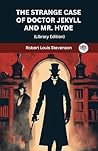
Review: The Strange Case of Doctor Jekyll and Mr. Hyde

The Strange Case of Doctor Jekyll and Mr. Hyde The Strange Case of Doctor Jekyll and Mr. Hyde by Robert Louis Stevenson
My rating: 5 of 5 stars

A wonderfully classic Victorian psychological thriller. The mysterious relationship between the respectable Dr. Jekyll and the disturbing Mr. Hyde unfolds through the investigation of Jekyll’s friend, Mr. Utterson. The themes of duality, repression, secrecy, and the darker side of human nature give this short story surprising depth. Most readers today already know the famous reveal, but I can only imagine what a wicked story this must have been for Victorian readers!

View all my reviews

Tuesday, November 3, 2026

Review: The First Witch of Boston

The First Witch of Boston The First Witch of Boston by Andrea Catalano
My rating: 2 of 5 stars

I picked up The First Witch of Boston for the historical story, and that was ultimately the part I found most satisfying. Knowing that Maggie and Thomas were based on real people made the story especially interesting to me, and I enjoyed the connections to seventeenth-century New England history. I was also satisfied with the ending.

Unfortunately, the book contains far more explicit sexual content than I expected or needed. I'm certainly not opposed to romance or a well-written love scene, but this went well beyond that for me. At times, the very detailed sex scenes seemed to overwhelm the historical narrative rather than enhance the relationship or the story. There was a fascinating historical novel underneath it all, and I wish the author had trusted that story a little more.

I also found the repeated references to Anne Hutchinson somewhat odd. Bringing Hutchinson into the story once or twice made sense as another example of a woman who challenged the religious and social expectations of Puritan Massachusetts. But the novel returned to her so frequently that I began wondering why other women and other examples from the period weren't used to provide a broader historical context.

Overall, I appreciated the underlying history and enjoyed the conclusion, but the excessive sexual content and somewhat narrow historical framing kept this from being as good a read for me as it could have been.

View all my reviews

Monday, October 12, 2026

Review: The Lottery : Short Story

The Lottery : Short Story The Lottery : Short Story by Ashley Grey
My rating: 2 of 5 stars

A very quick dystopian horror short that felt like a cross between Logan’s Run and Carrie. The atmosphere is tense and disorienting, but the story leans heavily on ambiguity; I was never sure whether the horror was meant to be real or imagined by Alex, the central figure. Dystopian fiction isn’t usually my lane, and this one didn’t quite land for me, though at only 11 pages, it was a fast read.

And to be fair, when I purchased this book (it was free, actually), I wasn't paying attention and thought it was the Shirley Jackson story.

View all my reviews
Wednesday, September 30, 2026

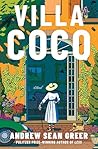
Review: Villa Coco

Villa Coco Villa Coco by Andrew Sean Greer
My rating: 4 of 5 stars

Pulitzer Prize winner Andrew Sean Greer returns with a charming tale of Geoffrey, a young American archivist who accepts what he believes will be a simple short‑term job in Italy: cataloging the artwork of his employer, the Baronessa at Villa Coco. Geoffrey arrives expecting the elegance of an Italian country estate, but quickly discovers the villa is a near‑dilapidated rural property filled with Italian‑speaking staff, eccentric locals, and a 92‑year‑old spinstress with a flair for dramatic stories and odd rituals.

Upon his arrival, the Baronessa immediately renames Geoffrey “Giovedì,” and he soon learns that nearly everyone in the household has been given a new identity by the mistress of the estate. If that weren’t odd enough, the sewer is overflowing, the cars don’t work, and an elderly woman in town spends her days shouting at passing drivers.

It becomes clear that Geoffrey has been hired less as an archivist than as a companion, assistant, and occasional co‑conspirator. The constant comings and goings of colorful friends, family, and staff keep Villa Coco in a state of laughter, chaos, and half‑told tales of wild capers. Romance unexpectedly blooms with the Baronessa’s cousin, though even that relationship is not quite what it seems. Mysteries swirl through the summer — missing items, strange stories, and something decidedly off about the artwork he was meant to catalog.

As the season winds down and Giovedì’s contract nears its end, he faces unexpected life choices. The mysteries of the summer unravel in surprising ways, leaving him and the reader with a gentle, humorous, and quietly satisfying conclusion.

View all my reviews